Multi Location Phone Guide for Growing Teams
A customer calling your second, fifth, or fiftieth location does not care how your phones are organized internally. They want the right answer now: Can you schedule service? Is the office open? Can someone help with an urgent issue? This multi location phone guide explains how to build call coverage that protects leads, serves existing customers, and keeps every location accountable.
For a dental group, a property management company, or an HVAC business, the phone is more than an administrative tool. It is where new business starts and urgent customer needs surface. When calls ring unanswered, the loss is not just a missed conversation. It may be an unbooked appointment, an unqualified lead, a tenant escalation, or a service request that goes to the next company on the search results page.
Why Multi-Location Phone Coverage Gets Complicated
Adding locations often creates more phone paths, more schedules, and more opportunities for callers to get lost. Each office may have its own local number, staff roster, service area, and rules for handling appointments. Meanwhile, corporate leadership still needs a consistent customer experience and a clear view of inbound demand.
The common mistake is treating every office phone as a separate problem. That leaves each team to decide who answers, how long they let calls ring, and what happens after hours. One location may have an excellent front desk while another relies on voicemail during its busiest lead window.
Centralizing every call without local context can create a different problem. A caller who reaches a generic operator and cannot get an answer about a specific office, provider, property, or technician may feel passed around. The goal is not simply centralization. It is coordinated coverage that combines brand consistency with location-specific knowledge.
Start Your Multi Location Phone Guide With Call Ownership
Before choosing technology or outside support, decide who owns each type of call. This is the operating decision that prevents gaps.
Start by separating calls into practical categories: new sales inquiries, appointment requests, existing customer support, billing questions, urgent service issues, and vendor or employee calls. Then define the right first response and next action for each category. A plumbing prospect who needs same-day help should not follow the same path as a supplier confirming a delivery.
For each location, document its hours, services, territories, staff contacts, escalation rules, and exceptions. Medical and dental offices may need distinct procedures for appointment changes and urgent messages. Property managers may need a clear distinction between maintenance requests, lockouts, leasing inquiries, and emergencies. Law firms may need intake questions that capture the facts needed for a timely consultation.
This information should be easy for the person answering the phone to use. A detailed internal manual has value, but callers need a prompt, confident response, not a receptionist searching through multiple files while the line goes quiet.
Give every call a destination
A good call flow answers three questions quickly: Who should handle this call now? What happens if that person is unavailable? What information must be captured if a live transfer is not possible?
For example, a caller to a multi-office real estate agency might be routed by the neighborhood they are calling about. If the assigned agent does not answer, the caller can be connected to a backup team member or have their inquiry captured for a prompt callback. The key is that the lead has an owner before the call ends.
Do not make “take a message” the default outcome. Messages are appropriate when a specialist must respond, but the answering process should still gather useful details, set expectations, and trigger a clear follow-up task.
Choose a Phone Structure That Fits Your Operation
There is no single best setup for every organization. The right structure depends on how independently your locations operate and how much local recognition matters to customers.
Many businesses keep local numbers for each branch because customers recognize them and local marketing campaigns depend on them. Those numbers can still feed into a shared answering operation, with prompts or routing rules that identify the caller’s intended location.
Other organizations use one primary number for sales and customer support while maintaining direct local numbers for established customers. This can simplify staffing and reporting, especially when multiple locations offer the same services. It may be less suitable when each office has distinct hours, teams, or service lines.
A third option is a blended model: local numbers remain public-facing, while calls overflow to a centralized team when a location is busy, closed, or unable to answer within a set number of rings. This approach often works well for growing service businesses because it preserves local identity without accepting missed calls as normal.
Whatever structure you choose, test it from a caller’s perspective. Call each published number during business hours, after hours, and during a simulated busy period. Listen for unclear menus, dead ends, long hold times, and transfers that reach the wrong team.
Build Scripts That Sound Local, Not Generic
Consistency matters, but word-for-word scripts can make a conversation feel stiff. Give call handlers a reliable framework rather than a speech to recite.
The opening should identify the company and, when useful, the location. Next, the agent should confirm the caller’s need, gather the information required to help, and take the correct action. For a home services company, that may mean confirming the service address, urgency, equipment issue, and best callback number. For a law office, it may mean identifying the practice area and preferred consultation time without offering legal advice.
Location-specific details should be built into the call guide: office hours, parking instructions, service boundaries, accepted appointment types, and on-call contacts. Keep this information current. An outdated holiday schedule or disconnected transfer extension can undo the value of otherwise professional coverage.
It also helps to define language support in advance. If a meaningful portion of your callers prefer Spanish, bilingual English and Spanish coverage can make access easier while ensuring important details are understood correctly.
Cover the Moments Your Office Cannot
The highest-value calls do not always arrive when the front desk is staffed. A prospective patient may call after work. A tenant may report an issue on a weekend. A homeowner may search for an electrician when an outage disrupts dinner. If no one answers, the caller is unlikely to wait until morning without looking elsewhere.
After-hours coverage should do more than announce business hours. It should identify urgent requests, capture qualified leads, route true emergencies based on your rules, and give callers a clear next step. The same applies to lunch periods, staff meetings, sick days, seasonal spikes, and call surges caused by a marketing campaign.
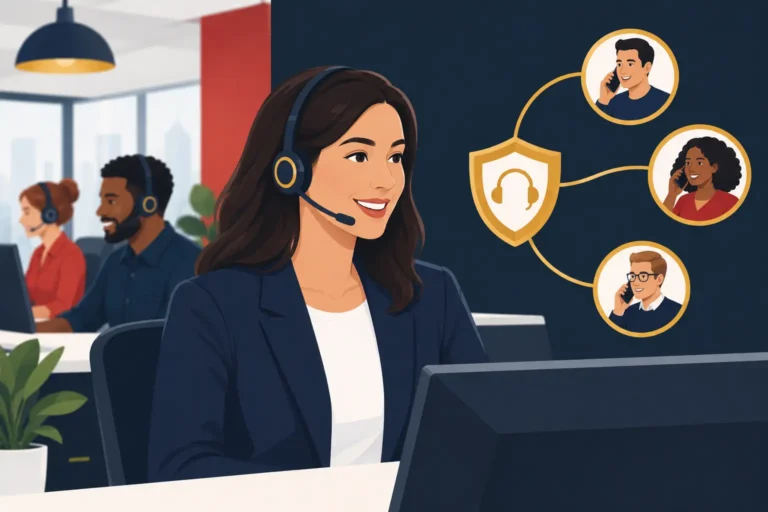
A live answering service can provide that coverage without requiring every location to carry a full round-the-clock reception team. OnCalla Solutions supports nationwide businesses with 24/7 live call handling, location-specific scripts, and lead routing designed to function as an extension of the front office. For organizations with predictable daily volume, a dedicated remote receptionist can provide consistent full-time coverage starting at $7 per hour.
Automation also has a role when it is applied carefully. An AI receptionist can handle routine questions and initial call direction instantly, then bring in a live agent when a caller needs help that requires judgment, reassurance, or a more detailed conversation. This hybrid approach is especially useful for high-volume, repetitive calls, but escalation rules need to be clear. A frustrated caller should never have to fight a menu to reach a person.
Measure What Happens After the Ring
Call coverage improves when leaders review outcomes, not just call counts. A location with fewer calls may still generate more valuable opportunities than a higher-volume office. Look for patterns by location, time of day, call type, and disposition.
Useful questions include: How many calls were answered live? How many new inquiries were captured? How quickly were messages returned? Which locations have the most after-hours demand? Are callers repeatedly asking questions that could be answered more clearly during the first conversation?
Review missed-call and abandonment patterns with local managers. If calls are consistently lost during a certain window, add overflow coverage. If a location receives leads outside its service territory, update routing or marketing information. If transfers fail, assign backups and verify contact details. Small operational fixes can prevent recurring revenue leaks.
Roll Out Changes Without Confusing Customers
A phone-system change should be introduced in stages. Begin with one location or one call category, then evaluate call recordings, outcomes, and staff feedback before expanding. This approach is safer than changing every number, script, and routing rule at once.
Tell employees what will happen when a call is transferred or a message is escalated. Define who monitors notifications and how quickly they must respond. The best answering partner cannot close the loop if the internal team does not own follow-up.
Most importantly, keep the customer experience simple. Callers should not need to understand your organization chart to reach the right person. When every location has clear ownership, dependable live coverage, and a practical escalation path, your business stays reachable when the next opportunity calls.