How Dental Offices Manage Calls Without Missed Care
A patient with a broken crown rarely calls at a convenient time. They may be in pain, worried about cost, or deciding whether to call another practice if nobody answers. How dental offices manage calls directly affects more than front-desk workload. It shapes appointment volume, patient confidence, schedule utilization, and the practice’s reputation for being accessible when it matters.
A busy dental office cannot treat every call as a simple interruption. New-patient inquiries, recall questions, insurance concerns, post-procedure calls, and dental emergencies all require a prompt response and a clear next step. The strongest call-handling process gives patients an answer without pulling the clinical team away from the patient already in the chair.
How Dental Offices Manage Calls During the Day
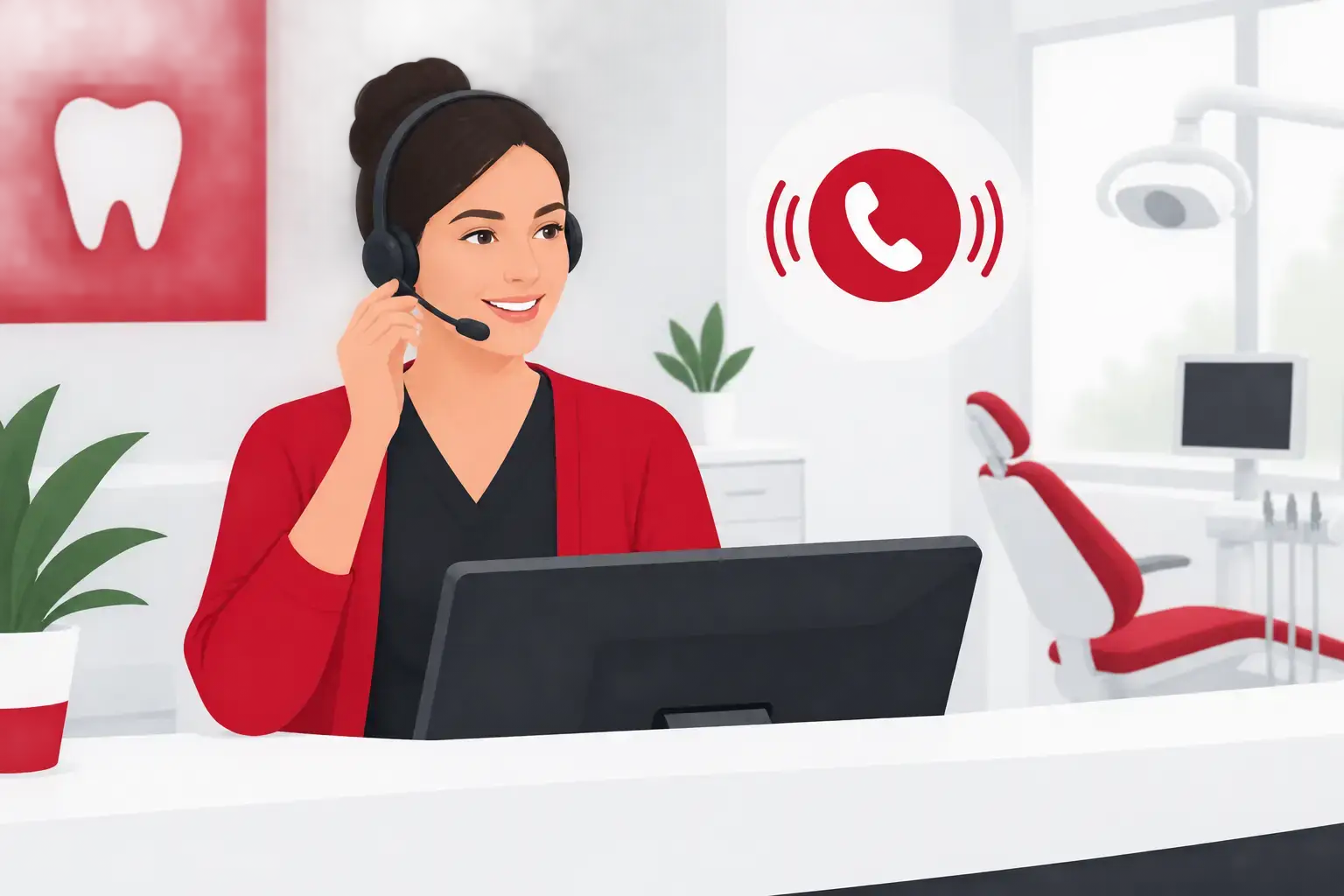
Most practices begin with an in-house receptionist or front-office team. That team knows the providers, understands the schedule, and can handle complex conversations that require immediate access to patient records or clinical staff. During a normal day, this is often the right foundation.
The challenge is that the front desk has competing responsibilities. A team member may be checking in a family, collecting a balance, verifying insurance, responding to a hygienist’s question, or helping a patient at checkout. When the phone rings at the same time, something has to wait. Too often, it is the caller.
Well-run offices reduce this pressure by setting clear call priorities. A new patient seeking an appointment should be answered quickly and guided toward booking. A patient reporting swelling, uncontrolled bleeding, or severe pain should be routed according to the practice’s established clinical triage process. Routine requests, such as a billing question or records request, can be documented and assigned for follow-up.
The difference is consistency. Every team member should know what information to capture, when to transfer a call, and when to promise a callback. Without that structure, callers receive different answers depending on who happens to pick up.
The information a dental office should capture
A useful call process does not require a long interrogation. It requires the right details: the caller’s name, callback number, whether they are a new or existing patient, the reason for the call, preferred appointment timing, and any urgency indicators identified in the practice’s script.
For new-patient calls, the goal is usually to move from interest to a scheduled visit. That may mean confirming the service needed, explaining the next available appointment, and gathering basic insurance information when appropriate. If the schedule cannot be accessed during the call, the office should still give the caller a firm expectation for when they will hear back.
For existing patients, accurate message-taking matters just as much. A vague note such as “patient called about tooth” creates extra work and delays the response. A clear message gives the team enough context to act quickly once they are available.
Why After-Hours Coverage Changes the Patient Experience
Calls do not stop when the office closes. Patients may search for a dentist after work, parents may notice a child’s dental issue at bedtime, and someone with a damaged restoration may need direction on a weekend. A voicemail box may technically receive the call, but it does not reassure a person who needs help now.
After-hours coverage gives a practice a way to remain reachable without asking internal staff to work around the clock. A trained live receptionist can answer in the practice’s name, capture patient details, follow approved escalation instructions, and route urgent situations to the appropriate on-call contact. For non-urgent callers, the service can offer the next step and ensure the office receives a complete message for follow-up.
This is not about having someone make clinical decisions. It is about making sure patients do not feel abandoned at the moment they need the practice. Emergency protocols should be built by the dental office and reviewed with the call-handling team. They should clearly define which situations require immediate escalation, which receive a next-business-day message, and when callers should be directed to emergency services.
The right approach depends on the practice. A single-location general dentist may only need evening and weekend coverage. A multi-location dental group, oral surgery practice, or office with a high volume of emergency cases may need 24/7 support and different routing rules by provider, location, or service line.
The Role of Scripts Without Sounding Scripted
Dental callers want clarity, not a rehearsed speech. Still, a good script is one of the most effective tools an office can use. It ensures the person answering knows how to greet callers, verify the reason for the call, ask approved questions, and offer the proper next step.
Scripts are especially valuable for common situations: new-patient scheduling, same-day availability, canceled appointments, payment questions, insurance inquiries, post-treatment concerns, and urgent dental issues. They also help protect the patient experience when calls are answered by someone outside the office.
The best scripts use plain language and leave room for judgment. Instead of forcing agents to read a rigid paragraph, they give them approved pathways. For example, a caller asking about a chipped tooth may need to know whether the practice has an opening that day. A caller describing severe symptoms may need to be escalated according to the office’s instructions. The agent’s role is to listen, capture accurate details, and keep the call moving.
Combining People and Technology for Better Coverage
Call management tools can improve speed and visibility, but they work best when paired with a clear human process. Practice-management integrations, call routing, appointment-request forms, text follow-ups, and call recordings can all help an office understand what happens after the phone rings.
An AI receptionist can also handle routine conversations instantly, including basic service questions, business hours, and appointment requests. For dental offices, the safer and more useful model is hybrid: AI handles repeatable calls and escalates to a live agent when a caller needs empathy, clarification, or help with an urgent concern. The caller should not have to repeat information after the handoff.
Technology is not a substitute for a thoughtful workflow. If the schedule is inaccurate, emergency instructions are unclear, or messages sit unanswered, better routing alone will not fix the patient experience. Office leaders should regularly review missed-call reports, voicemail response times, appointment outcomes, and the reasons patients call after hours.
When an Outsourced Receptionist Makes Sense
Hiring more internal reception staff can be the right move for some practices, particularly those with consistently high daytime volume and enough front-desk space. But it is expensive to build full-time coverage for evenings, weekends, lunch breaks, sick days, and overflow calls.
An outsourced answering service gives dental offices flexible coverage where the gaps are greatest. The service can answer overflow calls when the front desk is busy, provide after-hours support, qualify new-patient inquiries, and deliver messages using the office’s preferred process. The key is choosing a provider that can learn the practice’s terminology, scheduling rules, emergency workflow, and service standards.
OnCalla Solutions provides 24/7 live call coverage for dental offices that want every inbound opportunity handled professionally, with dedicated agent options starting at $7 per hour. For practices that serve Spanish-speaking patients, bilingual English and Spanish support can also make access easier for more callers.
Measure Whether Calls Become Appointments
A dental phone strategy should be managed like any other patient-acquisition and retention process. Track how many calls are answered live, how many become appointments, how quickly messages receive a response, and how often callers reach voicemail. Also look at abandoned calls, repeat callers, and common reasons for after-hours contact.
These numbers reveal where the schedule is leaking. If new-patient calls frequently arrive during the lunch rush and go unanswered, overflow coverage may be the practical fix. If patients repeatedly call after hours about the same post-procedure concern, clearer discharge instructions may reduce confusion while still keeping an on-call process available for genuine needs.
Every answered call is a chance to make a patient feel heard before they ever enter the office. Build a process that respects that moment, gives your team room to focus on care, and ensures the next person who needs your practice can reach a real, helpful response.