Emergency Dispatch Answering Service That Delivers
A burst pipe at 2:00 a.m., a tenant reporting no heat, or a patient with an urgent question cannot wait until the office opens. An emergency dispatch answering service gives those callers an immediate, professional response and puts the right on-call person in motion. For businesses where urgent calls affect safety, property, care, or customer trust, answering the phone is not an administrative task. It is part of the operation.
The goal is simple: never let an urgent caller reach a dead end. A well-run dispatch service captures the details, follows your escalation rules, and relays the request to the appropriate person without forcing customers to repeat themselves or hunt for another number.
What an Emergency Dispatch Answering Service Does
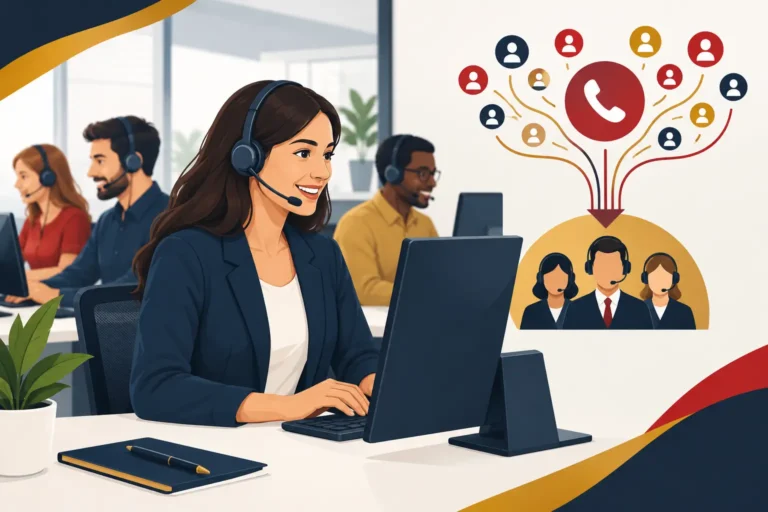
An emergency dispatch answering service provides live, around-the-clock call coverage for businesses that receive time-sensitive service requests. Agents answer in your business name, identify whether the situation meets your definition of an emergency, collect the information your team needs, and contact the designated on-call employee or technician.
This is different from public emergency response. Callers who need police, fire, or medical assistance should always contact 911. A business dispatch answering service is built for operational emergencies: an HVAC system failure, a plumbing leak, a lockout, an urgent legal intake, a property maintenance issue, or another situation that requires your business to respond quickly.
The service can also handle non-urgent calls after hours. That distinction matters. Not every late-night request should wake a technician, but every caller should receive a clear next step. The right process protects your team from unnecessary interruptions while making sure genuine emergencies receive prompt attention.
Why Missed Urgent Calls Cost More Than One Job
When customers call during an urgent situation, voicemail often feels like no response at all. They may contact the next provider, leave a negative review, or feel abandoned even if your team returns the call later. For property managers, contractors, healthcare offices, legal practices, and home-service companies, that gap can damage a relationship that took years to build.
There is also an internal cost. Without a defined after-hours process, owners and managers become the default switchboard. They field calls manually, sort through incomplete messages, and try to locate an available employee. That approach may work occasionally. It becomes unreliable when call volume grows, staff schedules change, or several incidents happen at once.
A trained live answering team creates a consistent front door for the business. Each caller gets a courteous response. Each message follows the same intake path. Each on-call notification is based on rules your organization has approved.
The Dispatch Process Must Reflect Your Operation
No two businesses define an emergency in exactly the same way. A water leak in an occupied apartment may require immediate dispatch, while a cosmetic repair request can wait until morning. An emergency dispatch answering service is most effective when the call flow reflects those real-world differences.
Start by defining what agents should treat as urgent. For a plumbing company, that might include active flooding, sewer backups, or no water in a commercial facility. For an HVAC provider, loss of heat during freezing conditions may need escalation, while a maintenance request does not. A legal office may prioritize calls involving an arrest, a court deadline, or an active incident.
Then establish who receives the call. The primary on-call contact, backup contact, escalation timing, and preferred notification method should all be documented. Some businesses use text messages for speed, followed by a phone call if there is no acknowledgment. Others need a direct transfer to an on-call line. The best choice depends on your team, coverage schedule, and response requirements.
Clear scripts matter just as much as contact lists. Agents should know which questions to ask, what information is required before dispatch, and what they should never promise. Good intake prevents the common problem of sending a technician out with no address, no callback number, or no understanding of the issue.
Information that makes dispatch faster
For most urgent calls, agents need the caller’s name, callback number, service address, the nature of the problem, and whether there is an immediate safety concern. Depending on your business, they may also collect unit numbers, account details, equipment type, access instructions, or a preferred arrival window.
The point is not to turn an emergency call into a long questionnaire. It is to capture enough accurate information for your responder to act with confidence. Short, well-designed questions keep the caller calm and reduce follow-up calls to the office.
Live Agents, AI, and the Human Escalation Point
Fast response does not have to mean choosing between automation and people. For routine call handling, a hybrid AI answering service can answer immediately, collect basic information, and help direct callers without hold time. When a caller needs a person, the conversation can move to a live agent with the available context carried over.
That model can be useful for businesses that receive a mix of common questions, appointment requests, and urgent service calls. It gives callers immediate access while preserving the human judgment needed for sensitive, complex, or high-stakes situations.
Still, automation is not the right answer for every dispatch workflow. If callers are distressed, the emergency definition is highly nuanced, or the information must be assessed carefully, live-agent coverage may be the stronger fit. The key is designing the handoff so urgent issues never get trapped in a menu or delayed by a process that does not recognize the situation.
What to Look for in a Dispatch Partner
A dispatch provider should be measured by more than whether someone answers the phone. You need a team that can represent your business professionally during the moments customers are most likely to remember.
Look for 24/7 availability, industry-specific scripting, clear escalation procedures, and the ability to update on-call schedules as your staffing changes. Ask how agents handle an unanswered on-call contact and whether backup protocols can be customized. Confirm that call notes are detailed, notifications are prompt, and the service can support bilingual English and Spanish communication when your customers need it.
Training also deserves attention. Your answering team does not need to perform technical work, but it should understand the terms callers use and the difference between a standard request and a true emergency. A property management caller reporting a gas smell, for example, needs different instructions than someone asking about a lease renewal.
OnCalla Solutions provides nationwide 24/7 phone coverage with live agents trained to follow client-specific scripts and escalation rules. That gives businesses a dependable way to capture urgent requests, route them correctly, and keep customer access open when internal teams are unavailable.
Build a Process Your Team Will Actually Use
The strongest dispatch plan is one your team can maintain. Keep on-call schedules current, review call outcomes regularly, and update scripts when recurring issues reveal a gap. If agents frequently receive calls that are difficult to classify, refine the decision rules rather than asking callers or agents to guess.
Test the workflow before relying on it during a real incident. Place sample calls at different times, confirm notifications reach the right people, and verify the backup path works when the first contact does not respond. A few practical tests can uncover outdated numbers, unclear instructions, and escalation delays before they affect a customer.
After-hours coverage is not just about having someone pick up. It is about giving urgent callers a confident next step and giving your team the right information to respond. When that process is clear, your business remains accessible when customers need help most.