Call Center Pricing Comparison for Growing Teams
A missed call is rarely just a missed call. It can be a new service request, a high-value sales lead, an appointment that goes to a competitor, or an existing customer who needs help now. A useful call center pricing comparison starts with that reality: the lowest advertised rate is not always the lowest cost to your business.
For US businesses that need dependable phone coverage, pricing should be measured against the value of answered calls, qualified leads, booked appointments, and retained customers. The right provider gives your callers a professional live response while helping you avoid the expense of building a full internal reception team for nights, weekends, overflow periods, or around-the-clock coverage.
Call Center Pricing Comparison: Start With the Billing Model
Outsourced call center providers commonly price their services in a few different ways. Each model can work well, but only when it matches your call volume, service expectations, and operating hours.
Per-minute pricing
Per-minute plans charge for the time an agent spends handling calls. This is common with answering services and can be practical for businesses with lower or unpredictable call volume. A company that only needs after-hours coverage, for example, may prefer paying for usage rather than maintaining a dedicated resource.
The concern is that a low per-minute rate can become expensive when calls run longer than expected. Detailed customer questions, appointment scheduling, call transfers, lead qualification, and urgent support needs all add minutes. Ask whether billing includes hold time, after-call notes, transferred calls, or time spent updating your systems. Those details can materially change the monthly invoice.
Per-call pricing
A per-call structure gives you a set cost for each answered interaction. It can make budgeting easier when calls are short and consistent, such as basic message-taking or routing. It is less predictable when the definition of a call is unclear.
Before choosing this model, confirm whether repeat callers, transferred calls, abandoned calls, and calls requiring follow-up count as separate billable events. Also ask what happens when a caller needs more than a quick message taken. A plan that looks simple can become restrictive if your customers need real assistance rather than a brief intake.
Monthly plans with included usage
Many providers offer monthly packages that include a set number of minutes or calls. This approach can provide a predictable base cost and works well for businesses with a stable call pattern. It is especially useful when management wants a clear monthly operating expense.
The trade-off is overage pricing. If seasonal demand, a marketing campaign, weather event, staffing shortage, or growth in sales activity pushes you beyond the included allowance, extra usage may be billed at a higher rate. Review both the included volume and the overage rate before comparing plans.
Dedicated-agent pricing
Dedicated-agent services assign a trained agent or team to support your business during scheduled coverage hours. Rather than sharing agent time across multiple accounts, you pay for focused capacity that can follow your processes, represent your brand, and manage more complex inbound work.
This model often makes sense for companies with consistent call volume, detailed scripts, multiple locations, ongoing appointment needs, or sales calls that require thoughtful lead qualification. It can also be a strong choice when callers expect a familiar, professional experience instead of a basic answering service.
OnCalla Solutions offers dedicated agents starting at $7 per hour, providing businesses with a cost-conscious way to maintain live inbound coverage while keeping control over how calls are handled. For organizations that need consistent support, an hourly dedicated model can be easier to evaluate than a plan with changing minute totals and overage fees.
What Call Center Pricing Actually Includes
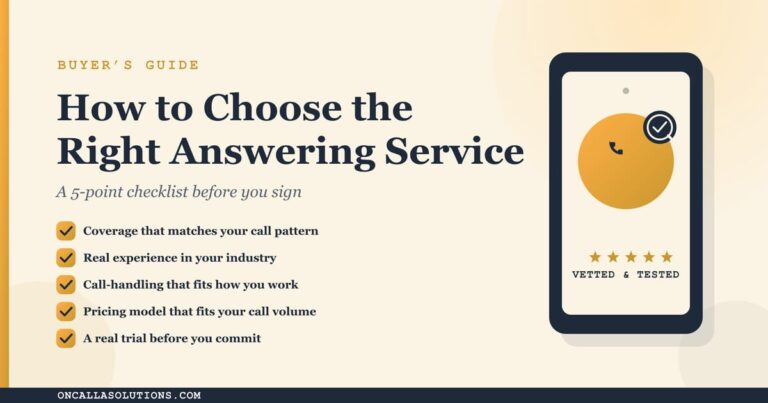
A rate alone does not tell you whether you are buying a reliable extension of your business or simply a person answering the phone. The most meaningful comparison looks at the service behind the number.
First, determine whether coverage is truly 24/7 or limited to certain hours. Some providers advertise availability but charge premiums for nights, weekends, holidays, or overflow calls. If customers contact your business outside normal hours, those are often the calls you can least afford to miss. A plumbing emergency, legal inquiry, home service request, medical-related question, or sales lead may not wait until morning.
Next, look at the scope of call handling. Message-taking is less costly than lead capture, appointment scheduling, customer support, order assistance, dispatch coordination, or warm call transfers. There is nothing wrong with a lower-cost message service if that is all you need. But if your team must call every lead back later to gather basic information, the savings may disappear in lost time and slower response.
Training and customization also matter. Can the provider use your greeting, ask your qualifying questions, follow escalation rules, and route urgent calls correctly? Does it document calls in the format your team needs? A provider that understands your workflow may cost more than a generic service, but it can prevent missed details that cost sales or damage customer trust.
Compare Labor Cost, Not Just Vendor Cost
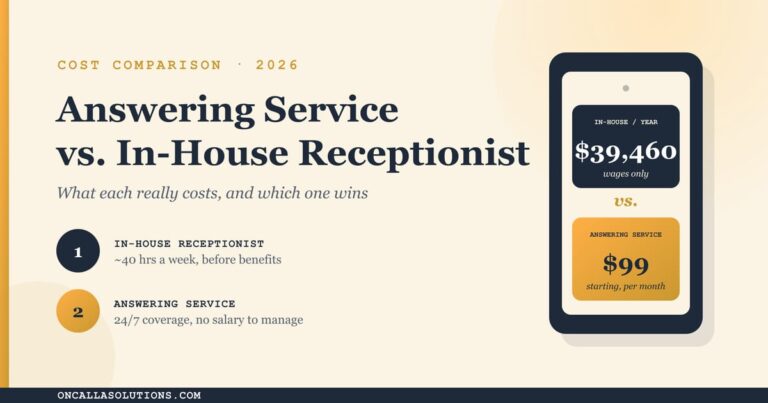
Businesses often compare an outsourced call center rate against the wage of an internal receptionist. That is a useful starting point, but it is not a complete comparison.
An internal employee comes with payroll taxes, benefits, paid time off, training, management time, equipment, coverage gaps, and turnover risk. Most importantly, one employee cannot answer the phone all day, every day. Lunch breaks, sick days, vacations, evenings, weekends, and high-volume periods still require coverage.
A live outsourced team can provide capacity when your internal staff is unavailable or focused on customers in front of them. For a small office, this can mean calls are answered while employees complete billable work. For a multi-location business, it can create a more consistent customer experience across every office.
The goal is not to outsource every customer conversation automatically. Many businesses use outside coverage for after-hours calls, overflow calls, appointment requests, and first-response lead capture while their internal team handles deeper account conversations. The best pricing model supports that division of work without making routine coverage unaffordable.
Domestic, Nearshore, and Offshore Price Differences
Location affects call center pricing, but it should not be the only deciding factor. US-based teams usually carry higher labor costs. Offshore providers in India or the Philippines may offer lower rates, while nearshore options can balance affordability with closer alignment to US business hours and customer expectations.
For inbound phone coverage, communication quality matters. Your callers should feel they reached a capable representative who understands their request, speaks clearly, and can move the conversation forward. Native English-speaking agents can be particularly valuable for businesses where trust, urgency, and clear lead details directly affect revenue. Spanish-English coverage may also be essential when serving bilingual markets.
A lower hourly rate is only a better deal if callers receive accurate information and your team receives usable messages, qualified leads, and properly routed urgent requests. If calls must be corrected, repeated, or recovered later, the apparent savings can quickly become a cost.
Questions That Reveal the Real Price
Before signing an agreement, ask how calls are billed, what counts as usage, and whether there are setup, training, technology, holiday, or cancellation fees. Request clarity on coverage hours, expected response times, escalation procedures, reporting, and service changes as your business grows.
You should also ask how the provider measures success. A service focused only on call volume may not be focused on your outcomes. A better conversation includes lead capture accuracy, appointment conversion, transfer quality, response speed, and the percentage of calls answered live.
Finally, review the contract for flexibility. Your needs may change with seasonality, new locations, marketing activity, or staffing transitions. A plan should allow you to add coverage when demand rises without forcing you into an oversized commitment during quieter periods.
Choose the Cost That Protects Revenue
The right price depends on the job you need the call center to perform. A low-volume business needing simple after-hours messages may benefit from usage-based billing. A growing company with frequent sales inquiries and complex routing may get better value from dedicated agents who learn the business and provide reliable coverage every day.
When comparing providers, place one question above every rate sheet: what happens to a customer who calls when your team cannot answer? If the service ensures that person reaches a professional live representative, provides the right information, and gets routed quickly, phone coverage becomes more than an expense. It becomes a practical way to protect the opportunities your business has already worked hard to generate.