Call Abandonment: Why Customers Hang Up Fast
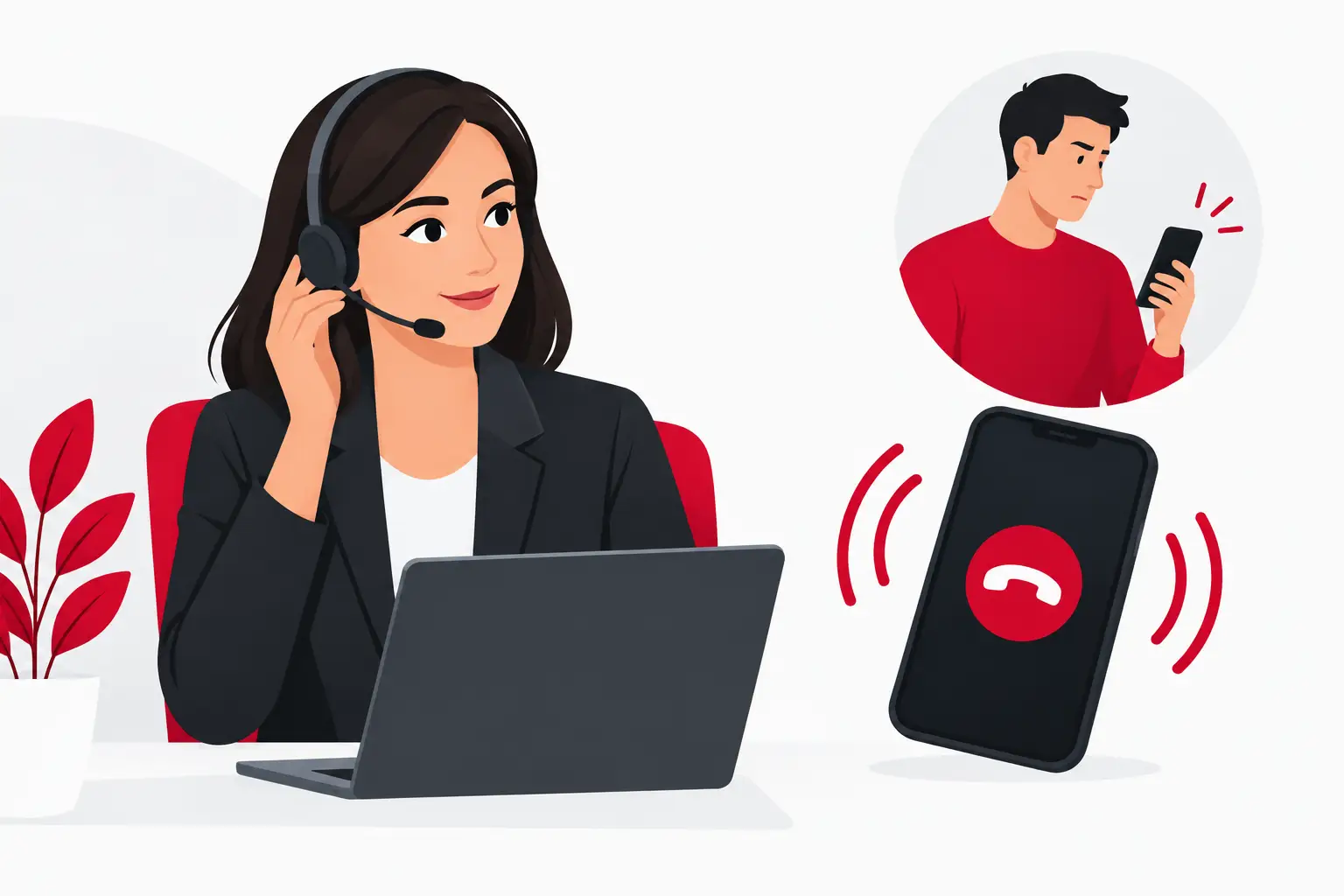
A caller who hangs up after two rings may already be calling the next law firm, HVAC company, dental office, or property manager. That is the immediate cost of call abandonment: a customer had a need, chose the phone, and did not reach anyone who could help.
For businesses that depend on appointments, service requests, consultations, and urgent inquiries, an unanswered call is rarely just an administrative issue. It can mean a lost lead, a frustrated existing customer, or a job that goes to a competitor before your team even knows the phone rang.
What Is Call Abandonment?
Call abandonment happens when a caller disconnects before speaking with an employee, receptionist, or qualified representative. It can occur while the caller is waiting in a queue, listening to a menu, being transferred, or simply hearing the phone ring without an answer.
The abandonment rate measures the share of inbound callers who hang up before their issue is handled. A high rate usually points to a capacity problem, but the cause is not always obvious. Your team may be excellent with customers once they connect, yet still lose opportunities because calls arrive during lunch, after hours, on weekends, or while staff members are helping people in person.
For a plumbing contractor, a missed call may be a homeowner with a burst pipe. For a legal office, it may be someone seeking timely counsel. For a medical practice, it may be a patient trying to schedule care. The caller does not experience the situation as a staffing gap. They experience it as your business being unavailable.
Why Customers Abandon Calls
Most callers do not hang up because they enjoy searching for another option. They leave when the effort required to reach your business feels greater than the value of waiting. Speed matters, especially when the inquiry is urgent or the caller has several providers to choose from.
Long hold times are the most visible cause. A caller who hears repeated hold music with no expectation of when someone will answer often assumes the wait will continue. Even a brief hold can feel longer when a customer is stressed, in a hurry, or calling from a job site.
Calls also get abandoned when the path to a person is unclear. Overly complicated phone menus, transfers between departments, and voicemail prompts can create friction at the exact moment a prospective customer wants reassurance. A menu has a place when it routes high call volume efficiently, but it should not become a barrier to help.
Limited coverage is another common source of lost calls. Internal reception teams need breaks, meetings, sick time, and time away from the desk. Service businesses also receive calls outside ordinary office hours, when customers have finished work, discovered a problem at home, or finally have time to make an inquiry. If the phone is only staffed during a narrow window, call abandonment becomes predictable.
The Hidden Business Cost of Abandoned Calls
The obvious loss is the lead you never captured. The less obvious loss is that abandoned callers can distort your view of demand. If your phones are not answered consistently, your reports may show fewer inquiries than your market is actually generating.
That can lead to poor operating decisions. A business may invest in advertising, add a new service area, or expand its sales team while overlooking the fact that a portion of its inbound response is leaking at the phone line. Marketing generates interest, but phone coverage determines whether that interest becomes a conversation.
Existing customers are affected too. A tenant reporting an urgent property issue, a patient checking on an appointment, or a client seeking an update may call more than once before giving up. Repeated unanswered calls weaken confidence and can increase the workload later, when staff must return messages, manage complaints, or repair a relationship that started with silence.
How to Spot a Call Abandonment Problem
Start by looking beyond total call volume. The key question is not just how many calls your business receives, but what happens to each call before a person answers.
Review your phone data for abandoned calls, average answer time, calls that reach voicemail, and call patterns by hour and day. Pay close attention to early mornings, lunch periods, evenings, weekends, and seasonal busy periods. A property management office may see spikes around move-in dates, while HVAC calls can rise sharply during extreme temperatures.
Then compare the numbers with what is happening inside the business. Are front-desk staff serving walk-in visitors? Are sales representatives on outbound calls? Are office managers trying to answer phones while handling billing, scheduling, or dispatch? The goal is not to blame the team. It is to identify when the workload exceeds available phone coverage.
Listening to a sample of recordings can also reveal whether callers are abandoning because of wait time, confusing options, poor routing, or a message that does not clearly tell them what to do next. If callers regularly ask for the same information, a better script or routing process may reduce unnecessary transfers.
Reduce Call Abandonment Without Overstaffing
Hiring enough in-house reception staff to cover every hour can be expensive, particularly for small and midsize businesses. The practical answer is often a coverage model that handles predictable gaps without requiring a full internal round-the-clock team.
First, set clear response standards. Decide how quickly calls should be answered and who owns calls when the primary person is unavailable. A standard only works when it accounts for real conditions, including peak call periods and after-hours inquiries.
Next, simplify the caller journey. Keep menu choices limited, route calls based on the caller’s purpose, and make it easy to reach a live representative when the issue requires one. For many businesses, the most effective experience is straightforward: a professional greeting, a few useful questions, and a fast handoff or message to the right person.
Finally, extend coverage where abandonment is most likely. A live answering service can answer overflow calls when your office is busy and provide after-hours coverage when your internal staff has signed off. Trained agents can capture contact details, qualify the inquiry, schedule appointments when appropriate, relay urgent messages, and follow your business’s instructions.
The right setup depends on the type of calls you receive. A law firm may prioritize intake details and urgent attorney notifications. A dental office may need appointment requests and patient messages handled with care. A home services company may need to identify emergencies, collect job details, and dispatch the right on-call technician. Scripts should reflect those differences rather than treating every call the same.
Where AI Fits in Call Coverage
AI can help reduce call abandonment when it is used to handle routine requests immediately, such as basic intake, common questions, or simple routing. The strongest approach is not to leave callers trapped with automation when their needs become more complex.
A hybrid AI answering service combines instant response for routine calls with live-agent escalation when a caller needs a human conversation. The live agent should receive the context already collected, so the caller does not have to repeat everything from the beginning. This can improve speed while preserving the professional judgment and empathy that high-value or sensitive calls require.
For businesses with variable call volume, this model can be especially useful. It gives callers an immediate response while ensuring a person is available for situations that demand attention, reassurance, or problem-solving.
Make Every Inbound Call Easier to Answer
Reducing call abandonment is not about keeping every caller on the line at any cost. It is about making it easy for legitimate customers to reach a capable representative quickly, whether they call at 10 a.m. or 10 p.m.
OnCalla Solutions provides 24/7 live call coverage for businesses that need their phones answered professionally when internal teams are unavailable. With industry-specific scripts, bilingual English and Spanish options, and dedicated agents starting at $7 per hour, businesses can protect lead opportunities without building a larger in-house reception team.
The next abandoned call may be a routine question, or it may be the customer who needed your help most. Review what happens when your team cannot answer, then build coverage around the moments your callers are most likely to need you.